Sales Trend of Different Tesla Models
Overall:
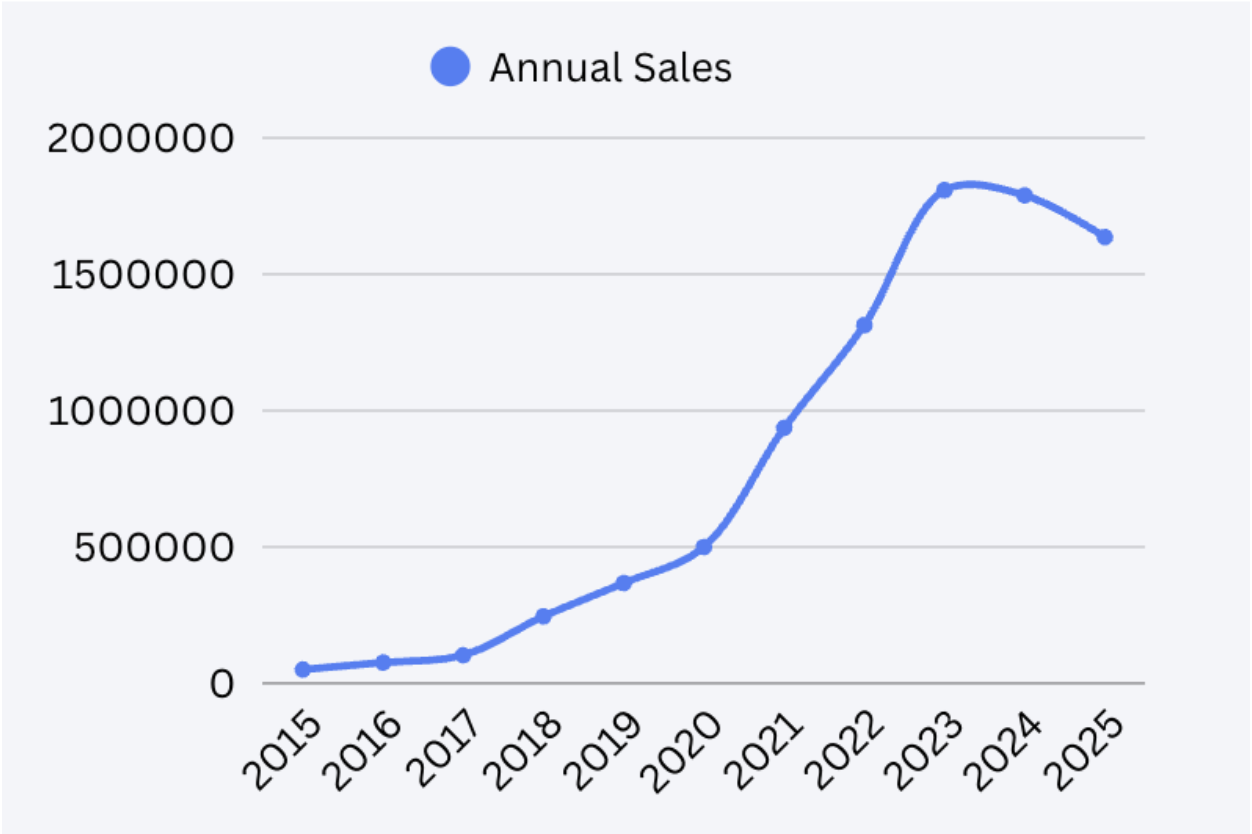
Tesla's annual global vehicle delivery figures demonstrate a steady multi-year growth up to a peak in 2023, followed by a brief cooling period and a subsequent recovery:
Growth Phase (2015-2019): Deliveries experienced a gradual, consistent upward trajectory from under 100,000 units in 2015 to approaching 400,000 units by 2019. This is when high-end models are being sold and its direct-selling marketing is being tested.
Acceleration (2020-2023): Sales skyrocket aggressively, crossing the 500,000 milestone in 2020 and past 1.8 million units to reach a peak in 2023. This is the time Tesla dominates the electrical car market using new concepts, new technology, and new business strategies.
Moderation (2024-2025): Annual deliveries experienced a slight stabilization and cooling trend through 2024, followed by a minor adjustment heading into 2025 while maintaining high overall volume above 1.6 million units. (this might be a result of Musk's shifting in business pivot to SpaceX)
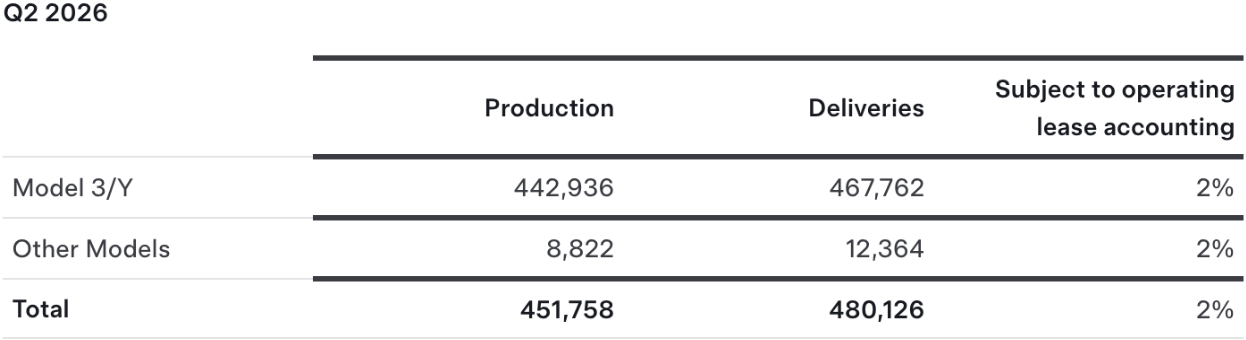
In recent years, Tesla is increasingly focusing on its low-end models: 3 and Y. With the roughly proportion of 1:50, 3 and Y out run the earlier models by a lot. Noticing that the deliveries surpassed the production of all models, meaning the inventory is going down, showing the conservative strategy of Tesla.
“Accelerate the world's transition to sustainable energy.”——Elon Musk, CEO of Tesla
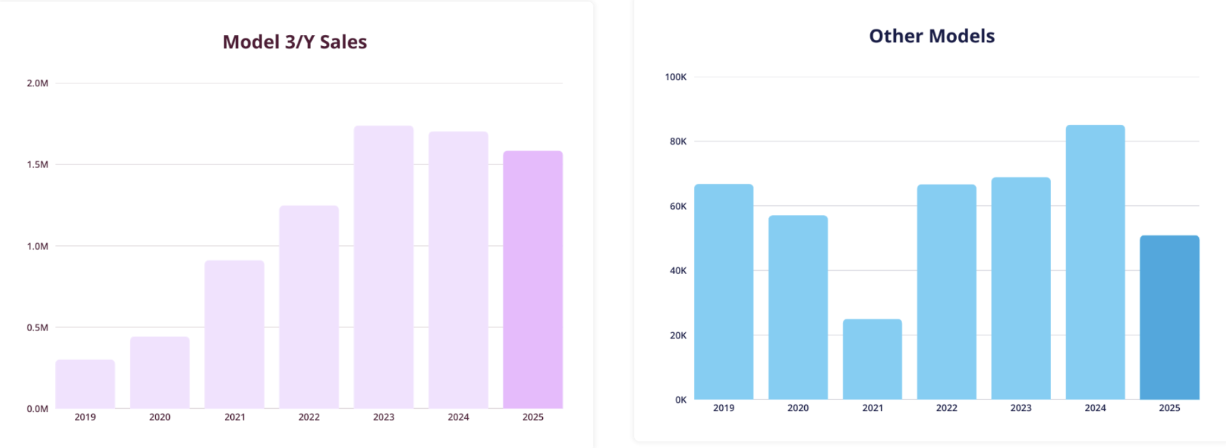
Model 3/Y (2019-2025): High-volume vehicles demonstrated rapid expansion from roughly 300,000 units in 2019 to a peak near 1.75 million units in 2023, followed by a slight plateau last year.
Other Models(2019–2025): Legacy vehicle (X/Y) lines fluctuated within a lower volume band (ranging between 25,000 and 85,000 units), experiencing a significant dip in 2021 before a recovery peaking in 2024 and a subsequent drop in 2025.
Comparing: 3/Y starts low from 2019, but it is increasing EVERY Year. While other more expensive models show relatively stable sales and an anomaly in 2021 (probably due to covid). This indicates a business strategy shift from Tesla: Opening the market using high-end models, expanding the market using low-end models. (No one cares about Roadster now XD)
Action Item:
Maintain a high-volume production focus. Tesla should allocate manufacturing resources mostly on model 3 and model y to sustain the 50 to 1 ratio of different model types. In other words, Tesla is transforming from a high-end electrical car mass customization producer to a mid-low-end standard car producer.
Balance output and input. Utilize the current inventory as a benchmark to prevent overproduction in future years. And maintain a minimum inventory hold as it does not need further propagation, since it is already the no.1 electrical car producer in the world, so it is for sure its car can be sold instantly.
Improved Interactive Output:
What-If Simulator: Propose a digital slider tool where users can adjust projected growth percentages for Model 3/Y. So users can have a clearer view of the sale projection over years and over different models.
Inventory vs. Production Amount Toggle: build an interactive chart that allows users to overlay production numbers directly against delivery counts, so it can visualize surplus and clearance in real time.